
About Bamboo Leaves
Bamboo is evergreen — but its leaves aren't forever. Every spring a fresh set quietly pushes off the old, so the screen never goes bare. Here's how bamboo foliage works, why you should leave fallen leaves where they land, and the surprising things bamboo leaves are used for.
An evergreen with an annual leaf swap
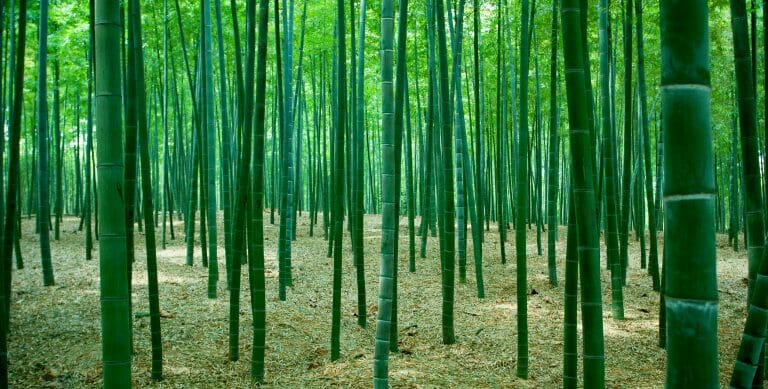
Bamboo is a perennial evergreen with an annual leaf exchange. New leaves emerge in spring and gently push the old ones off, so in the right climate a healthy grove is never without foliage — privacy in every season.
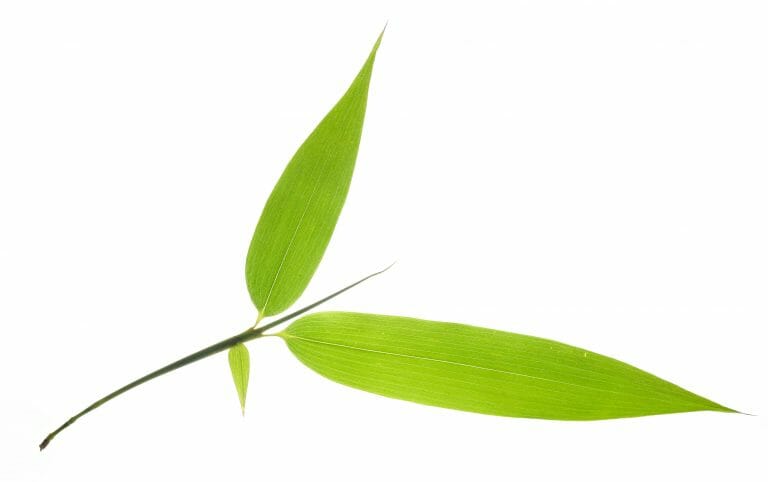
The leaf life cycle
Each new leaflet emerges like a tiny shoot behind the existing foliage in spring, then expands and unrolls — and as it does, the old leaf drops. The swap is so gradual that most people never notice it without a close look.
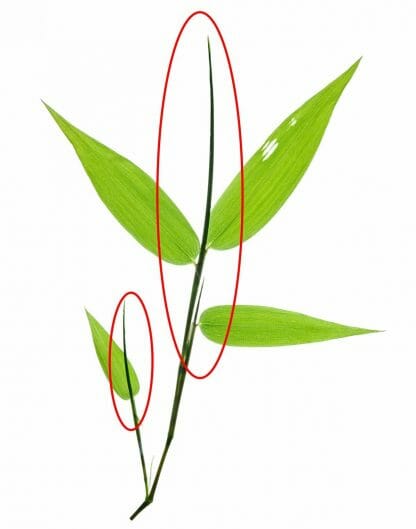
Leaves age naturally through the year, and species, soil, and weather all shift their color a little. Late in the cycle, older leaves get more prone to harmless fungal, bacterial, or scale spotting — a normal end-of-life process that rarely passes to the fresh foliage.

Leave the leaves
When old foliage drops, leave it on the grove. Bamboo leaves are rich in silica — which bamboo loves — so they act as a natural fertilizer as they break down (usually within a year). The leaf mat also suppresses weeds and looks beautiful on the forest floor.
How big do bamboo leaves get?
Most bamboo foliage is small and fine — Phyllostachys leaves (the most common temperate bamboo) run about 3–6 inches long and ½–¾ inch wide. But with over 1,400 species worldwide, sizes vary wildly: Indocalamus tessellatus can push out a leaf 26 inches long and 5 inches across.
What bamboo leaves are good for
Bamboo foliage is high in fiber, protein, and silica — and increasingly useful. Some species test up to 22% protein, which makes the leaves a promising livestock feed (horses have been seen bending canes down just to reach them). Bamboo is also one of the richest organic sources of silica, with leaf extracts full of flavonoids and antioxidants — already turning up in bamboo tea, beer, and herbal remedies as those industries develop.
Curious how the whole plant grows? See how bamboo grows. Want fine-leaved screening bamboo? Browse screening bamboo, or the big-leaved Indocalamus tessellatus.