
How does bamboo grow?
How fast does bamboo grow?
- Bamboo produces new canes (culms) in the Spring. These shoots emerge out of the ground and grow in height and diameter for around 60 days. During this 60 day period, it will produce limbs and leaves.
- After the 60 day period of growth, the bamboo cane never grows in height or diameter again. Bamboo doesn’t experience secondary growth like trees or most flora. It will put on new foliage every year, and a cane typically lives for 10 years.
- Bamboo is a member of the grass family. It is a colony plant, so it uses energy from this existing plant to produce more plants and expand the root structure. The new plants will grow in the same manner. New shoots emerge to turn into a cane with limbs and leaves within a 60 day period.
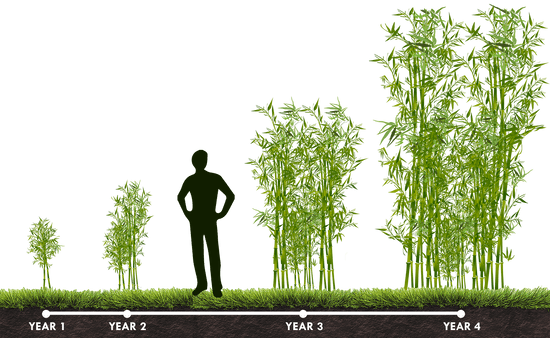
- Bamboo takes about three years to get established. Once established the new shoots that emerge in the Spring (they will still only grow for 60 days) will continue to get bigger and more numerous from year to year as the colony grows towards maturity. It takes a varying number of years (4-15) for different species to reach their maximum size. This is dependent on species selection, soil, sunlight, climate and watering conditions.
This may seem lengthy, but it is important and interesting to understand your new bamboo. Every year we have customers contact us because their bamboo is just sitting there and not taking off. Bamboo grows differently than most other plants. It is difficult to grasp what is happening. It did not get the title of “fastest growing woody plant on earth!” for nothing!
How to start growing bamboo
Use a plant and not seeds! Temperate bamboo typically seeds on 75-year cycles and the viability of the seeds are very short. If true seeds can be sourced, they are typically not viable and an ill advised use of time and funds. More about seeds
It is very important to realize that the bamboo division you begin with is only going to grow underground. The culms (cane) attached to the rhizomes or roots has finished growing and will only support the rhizome system. So do not expect the culm to take off and get larger or taller. Each Spring the culm emerges the diameter it will be and grows to the height it is going to be in a couple of months. The growth of the entire life cycle of the cane will be completed in just a couple of months.
Bamboo Growth Cycle
-
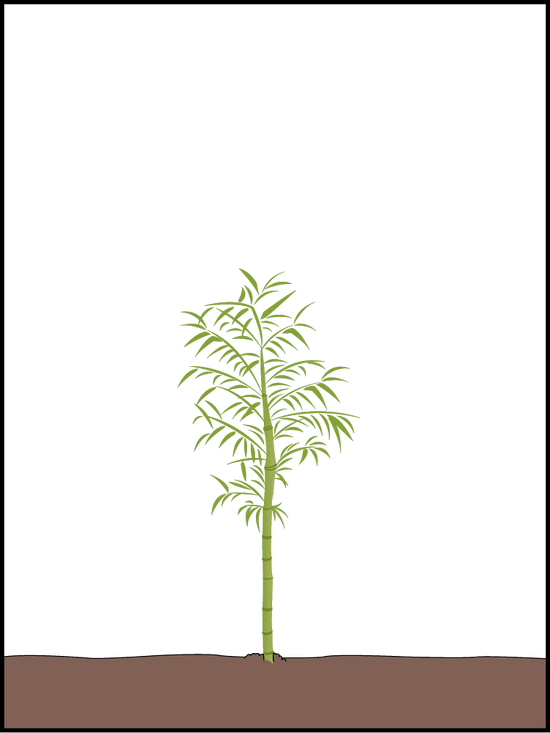
INITIAL PLANTING
Initial bamboo never grows in height or diameter again.
-
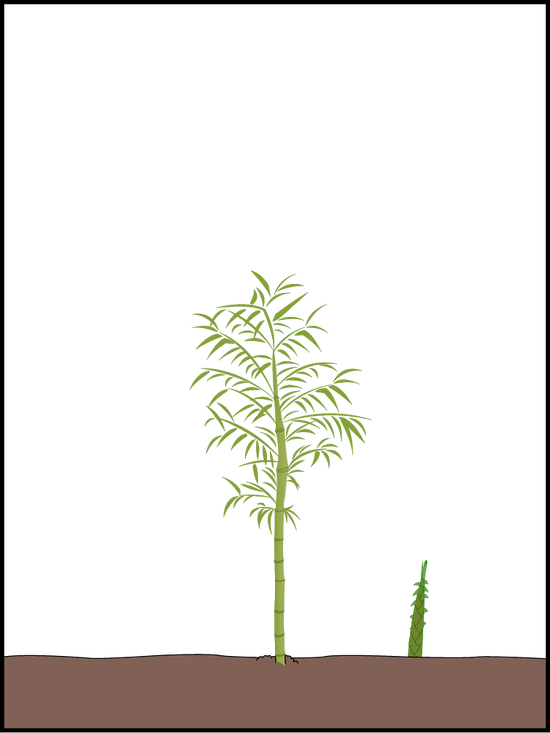
1ST SPRING
New shoots emerge during spring and can grow up to 4 feet per day.
-
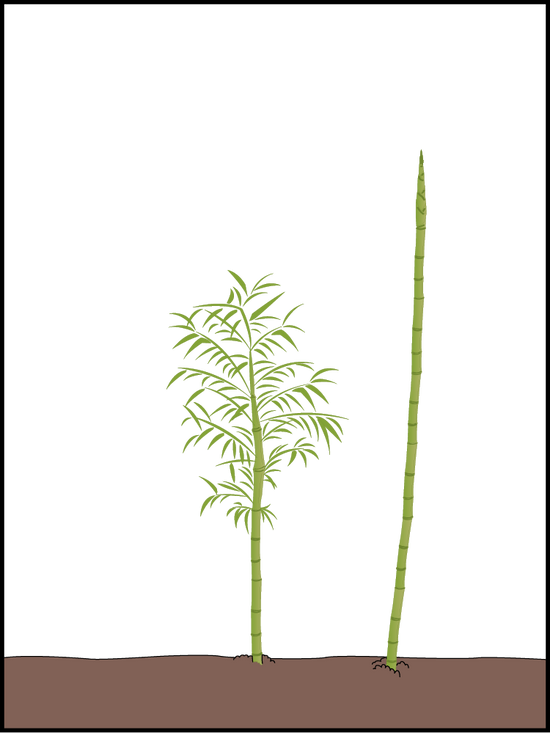
LATE 1ST SPRING
New growth cycle usually lasts 60 days.
-
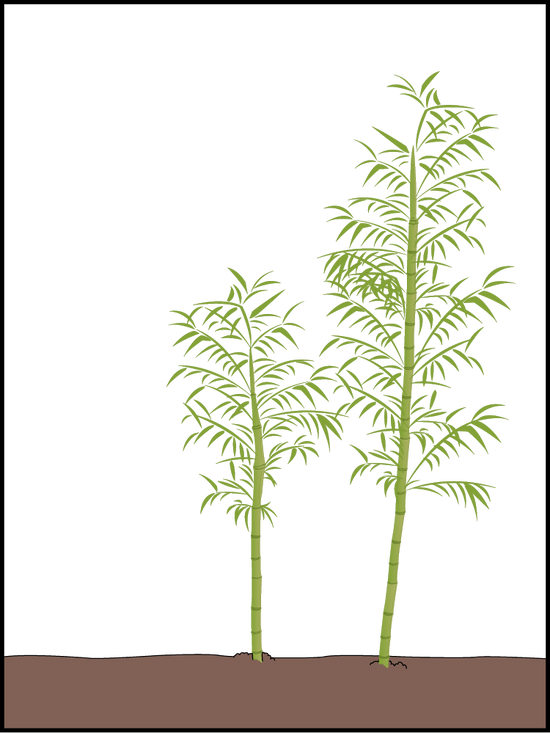
1ST SUMMER
After the 60 day growth period, this cane will never grow again.
-
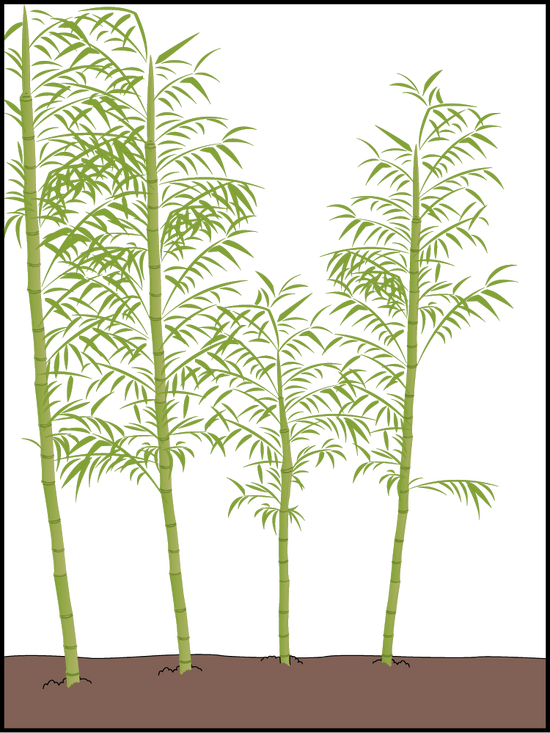
2ND SUMMER
The bamboo grove uses energy from existing canes to produce larger & more numerous spring growth.
-
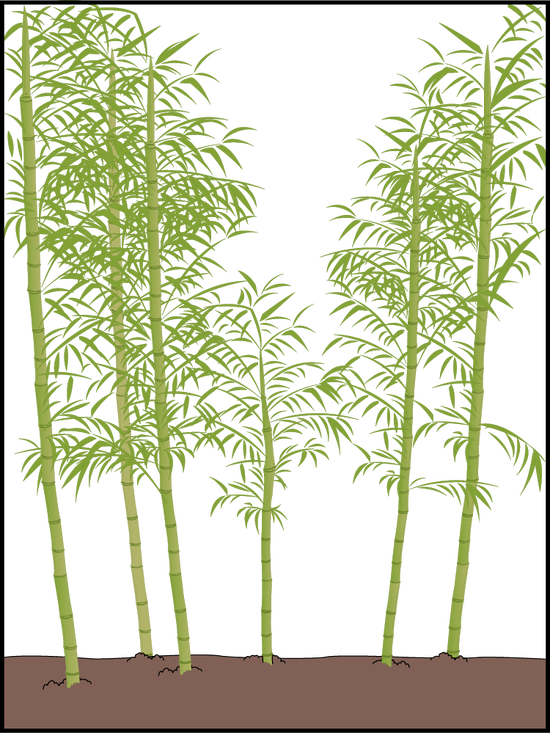
3RD SUMMER
The bamboo grove continues producing larger canes until maturity is reached, usually 7-10 years after planting.






Size of initial planting, species, the age of grove and environment are all factors that influence new shoot size.
Your starter plant should be a healthy division from an established bamboo grove.
The bamboo you start off with, should not be thought of as an individual plant but one that will become a colony.
This colony or grove is mostly underground (50% of its mass). The culms or canes provide nourishment for the underground colony of rhizomes. These rhizomes are roots and are similar to the culms in appearance. They have nodes and internodes. The area between the nodes (swollen area) is the internodes. From the node area, new Bamboo root (rhizome) diagramroots and rhizomes will grow. The increase of rhizome growth allows the bamboo to store nutrients and therefore, produce larger plants until a mature culm size is obtained throughout the grove.
A baby girl and boy may have some similar characteristics to its parents, but it will not look just like them at an early age. As the baby matures it will look more like the parents. The same goes for your new bamboo division. The canes or shoots and leaves will most likely not have all the characteristics of the mature size bamboo such as stripes or leaf size. Just keep in mind all the bamboo characteristics, just like a newborn, may take some time to present proper characteristics. Because of this latency, it is advisable that you buy bamboo from a reputable source.
New Growth
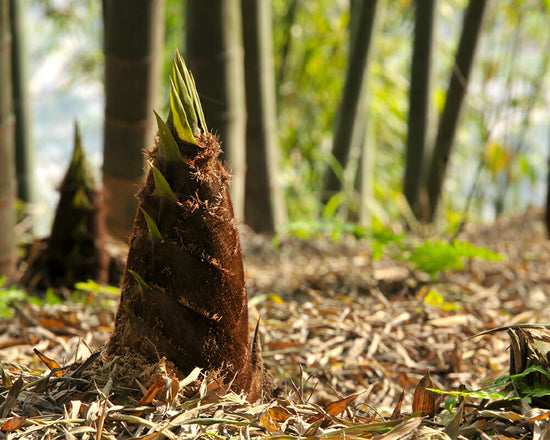
During the springtime, new culms (canes) will emerge upward from the rhizome nodes. These new shoots are very tender and can be broken by the slightest bump. The culms emerge from the ground with the diameter that it will always have and will grow at an amazing rate for 40 to 60 days.
Bamboo has an amazing growth rate. It is much like a telescope in its growth habit as it emerges. Its growth has been measured at almost 4 feet in a 24 hour period during the Spring shooting period. When the new shoot reaches its height, it will unfold its branches and new leaves. Even though the culm will never increase in diameter or height the rest of its life.
When does new growth emerge?
New plant growth or shoots will initiate around March and extend through May for Phyllostachys bamboo in the Northern Hemisphere. This period will vary a little with different species and local ecological conditions.
How to grow bamboo faster?
Bamboo is the fastest growing plant on earth but have you ever wondered how to make it grow faster? Here are the key points to help maximize and accelerate bamboo’s growth…
Start with big established or stabilized plants
The larger the plant you begin with, the larger the rhizome system and the faster it will begin to produce larger and numerous shoots. Bamboo is a colony plant so the plant with more numerous and larger rhizomes are capable of producing better growth. You can not take a short cut in the amount of time that it takes a species to establish it’s rhizome system but starting with a health division is crucial. Avoid sellers who provide freshly dug plants because this is the most unstable time when they have been recently separated from their energy source.
Soil conditions for bamboo
Bamboo is not picky about soil conditions, but optimal soil conditions are a pH=7 or neutral, sandy loam with high organic content. Bamboo like most plants performs better with an adequate layer of organic matter and loose soils to allow for drainage. However, bamboo will work well in clay and less advantageous soil conditions.
Bamboo roots are not deep and source most of their nutrient in the first 12 inches of soil. Bamboo will not grow in standing water, the soil has to be capable of drainage. The root system can deteriorate if submerged for water for weeks. Bamboo should not be confused with “Lucky Bamboo” which is technically a lily and can grow in water.
How much sunlight does bamboo need?
The more sunlight received, the more energy available to photosynthesis and growth. Most bamboo requires at least 4 hours of filter sunlight or better to have a successful planting. There is a smaller group of species with a larger leaf and smaller canes, 20 feet or less, that prefer partially shady growing conditions but this is not the norm for bamboo.
How many plants do I need?
Bamboo has compounding growth. Starting with several bamboo divisions and this will dramatically increase the amount of bamboo you have each year and shorten the time it takes to make a privacy screen or grove. However, you can establish a grove of bamboo with just one good division, it will just take longer.
If you are wanting a screen or grove rapidly, we suggest planting on 5′ foot centers or closer. This will hopefully provide a screen in 3-5 years. The larger your initial size, the taller your screen will be during the time frame. Closer spacing will accelerate a dense screen or grove faster. You cannot over plant bamboo.
Do I fertilize bamboo?
Fertilizing can accelerate growth by a year or more. Fertilizing is the best way to increase growth! Bamboo can benefit from the extra energy provided by additional fertilization and not all soils are created equal. Because of common soil deficiencies and bamboo’s desire to grow, we recommend using a well balanced time-release fertilizer.
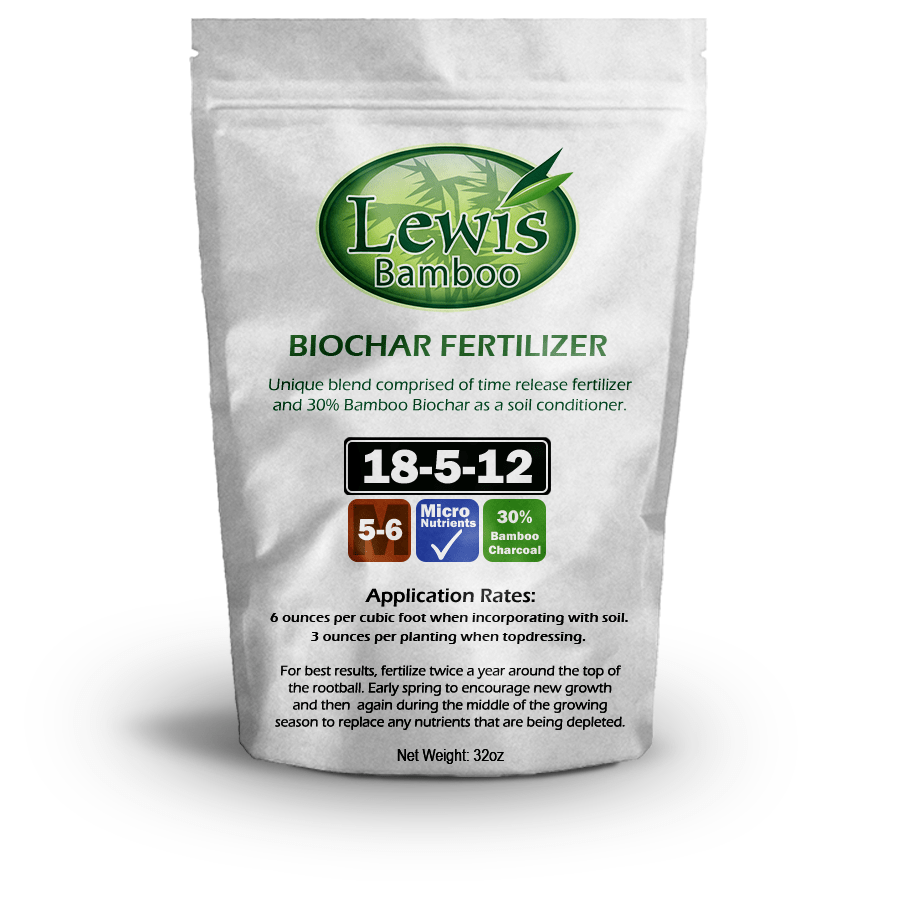
A time release fertilizer helps by reducing leaching and provides nutrients on a timeline that correlates closer to the bamboo ability to uptake the nutrients. Fertilizing can help accelerate growth and greatly reduce the time it takes bamboo to create a privacy screen or achieve a mature size.
This may not sound like a lot of growth for three years, but at a five-year level, you should have 20 to 40 culms (canes) 3/4 + inches in diameter and 20+ feet high, under good growing conditions, from a single bamboo planting. Of course, this varies with the species selected and some species can be over 3-inch diameter and 40 feet high in ust 7 years.
What to expect from the bamboo grove?
It takes bamboo about three full years, in the ground, before the mother plants really take off and start producing multiple shoots providing a bamboo grove appearance. Here are the typical results under normal growing conditions: From a 3 gallon size Phyllostachys species you should have a couple of new shoots the first spring. Then next spring those canes are capable of producing a couple more canes each. By the third year, the effects of compounding growth really become evident when all those canes produce more growth. It gets quite impressive after about three full years because the new culms (canes) that emerge each Spring will be larger and taller than the last year’s growth.
First three years of growth
- Sleep
- Creep
- Leap!
The mother plant (regardless what size that you begin with) is finished growing in diameter and height, but the rhizome will grow outward underground. Bamboo is a (grass) colony plant and most of the bamboo grove will be underground. Each Spring, the new culms will begin to emerge larger in height and diameter than the previous Spring’s growth, until the mature size of that species is reached after several years.
As a bamboo grove develops, the new culm (canes) become larger in diameter and the height increases in each NEW cane until the grove reaches maturity. The oldest culms are usually the smallest in size. The new culms, produced during the Spring of each successive year, will emerge larger than the previous year’s growth, as a general rule. This is due to the increase in the underground system of rhizome or roots.
Controlling the bamboo
Temperate running bamboos typically seeds on 75-year cycles with a very low seed set. It is very hard for bamboo to propagate by seeds. The main mechanism of propagation is root (rhizome) expansion and new culm production.
If you control the roots, you control the bamboo. You can do a root pruning twice a year or Bamboo Shield is a great option. Bamboo Shield provides a worry-free way of containing bamboo. With Bamboo Shield, you can define the specific area in which you want the bamboo to grow. It can be used to form long privacy screens or even unique patterns in the ground. It is easy to install as long as you are able to dig in your soil. A trench is dug around the desired containment area and the Bamboo Shield is installed vertically to prevent the spread of bamboo roots (rhizomes). Bamboo does not have a tap or deep vertical roots. It has a superficial root system that runs parallel to the ground typically in the first 14″ of the topsoil.
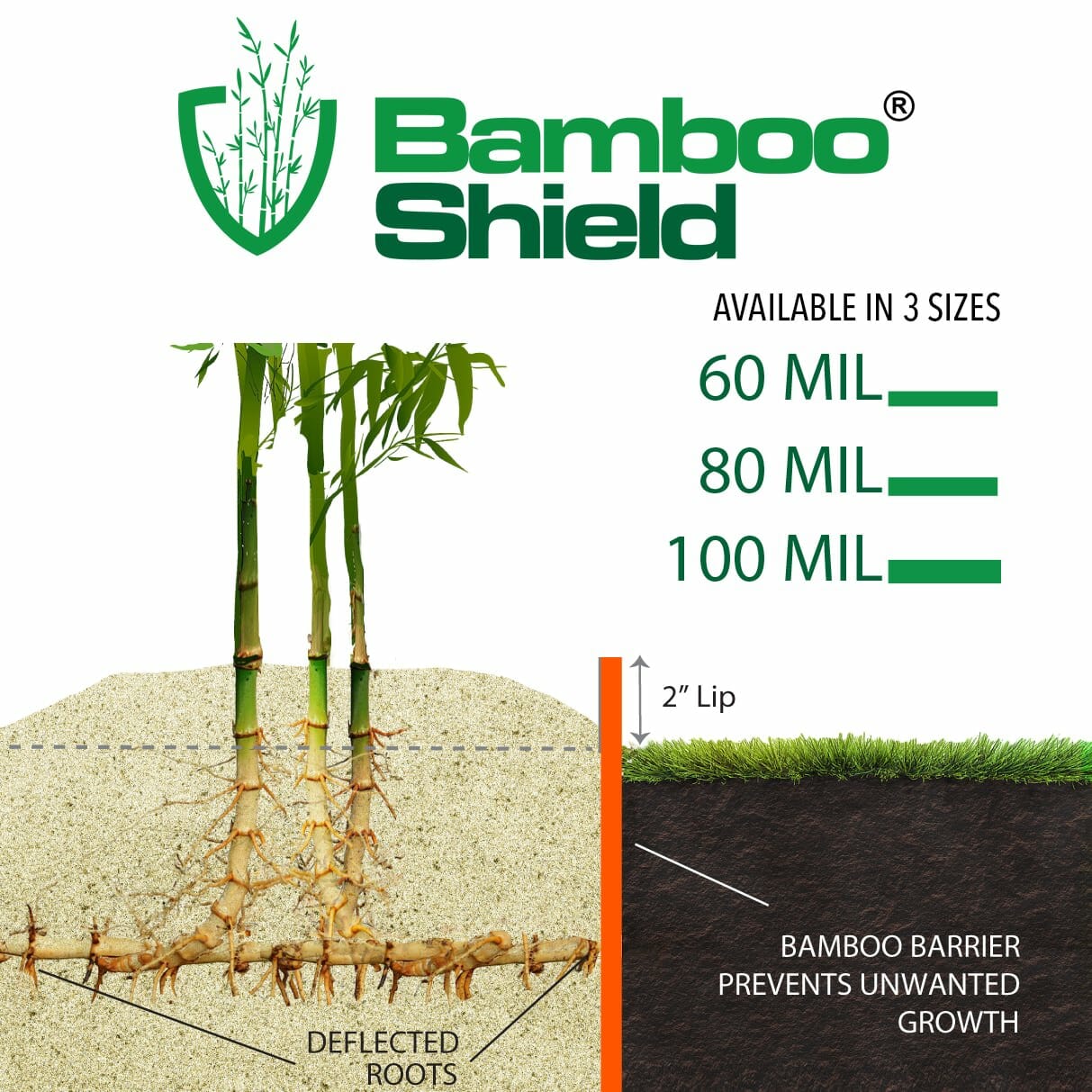
Stop Bamboo in its Tracks.
Lewis Bamboo is the industry leader in bamboo control products.
Bamboo is a grass and can be controlled to provide privacy screening or nice contained groves. Bamboo will not take over the world, it would have already done so thousands of years ago if that myth were true. Thousand and thousands of gardeners have enjoyed and used bamboo for thousands of years. With just a little bit of maintenance or installation of the Bamboo Shield, you will be able to enjoy the fast-growing, evergreen privacy that only bamboo can provide.
Bamboo Anatomy
Bamboo is a monocot because of hollow stems with scattered vascular bundles and parallel vein leaves. The woody ringed vertical stems are called culms or commonly referred to as canes. The most prolific species of temperate bamboo is of the Phyllostachys genus. They will have a groove or sulcus above each branch attachment with two alternating limbs at each nodal ring. This is the species that most people think of when images of bamboo are conjured up. However, there are many species with various characteristics. Some species have a colored groove or sulcus. The internodes may be green with a yellow stripe in the sulcus. On the other hand, some have yellow canes with green stripes in the sulcus. Others are green with black coloring, solid black, spotted with burgundy or purplish colors. Many species have 3 limbs or more at each node. The list of different bamboo goes on and on. That is not even getting into the different color of leaves and their variegation.
Bamboo are evergreen and put on new leaves each year. This new leaf growth happens during the Springtime. This process is gradual and is highlighted by the appearance of a new carpet of golden brownish leaves within the grove. It is important not to remove this carpet of leaves from the groves for it provides mulch and nutrients for the colony. Since bamboo is an evergreen, it is capable of providing privacy screening in all seasons.
Cold Weather & Bamboo
The cold hardiness of our temperate bamboo are taken from the American Bamboo Society’s Source List and are as accurate as possible. Any variations listed are from our own personal or business experience and we will constantly study and observe bamboo in order to provide you with the most up to date and accurate data possible.
Many of the bamboos will live even after being exposed to temperatures lower than those listed. While it may be distressing to see your beautiful foliage or culms die due to extreme cold or wind chill, it is comforting in most situations to see the bamboo bounce back, the following Spring with new culms and often new foliage on what appeared to be dead culms. Again, this only happens when the bamboo has been exposed to temperatures below those suggested for that species or extreme wind chills.
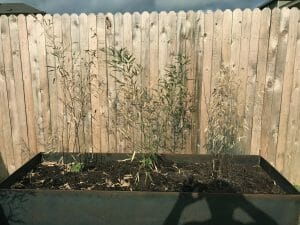
It is always important to choose an appropriate species for your climate zone and application. Important application note… Containers and planters do not provide the same amount of insulation as the ground does. If you are utilizing a planter or container it is crucial to choose a species that is more cold hardy than is typically required for planting in the ground.
How long does bamboo last?
A bamboo grove can last for a hundred year or more. An average cane may live up to 15 years depending on the species, but to generalize, 7 to 10 years is more common. The starter plant and smaller plants will begin to die off a little faster as the grove matures because of sunlight absence. The goods news is that several years down the road when the starter plant starts to expire, you will be well on your way to having a grove or screen of mature size canes emerging each Spring and Summer.
Bamboo applications
There are over 200 species that can be grown well in North America, this will be determined by your climate zone. Bamboo can add greenery to your garden during the winter, it can stabilize the soil of embankments and control the worst of erosion problems. This plant can provide privacy or windscreens and can be trimmed to the height you desire.
We carry a species of bamboo for almost all application with a multitude of sizes, colors, and cold hardiness.
- Privacy Screens
- Ornamental
- Accent plantings
- Indoor plants
- Zoos and Botanical Gardens
- Bamboo products
- Biomass applications
Get started with your own bamboo today!
-
Red Margin Bamboo
Regular price From $49 + free shippingRegular priceUnit price per$69Sale price $49 + free shipping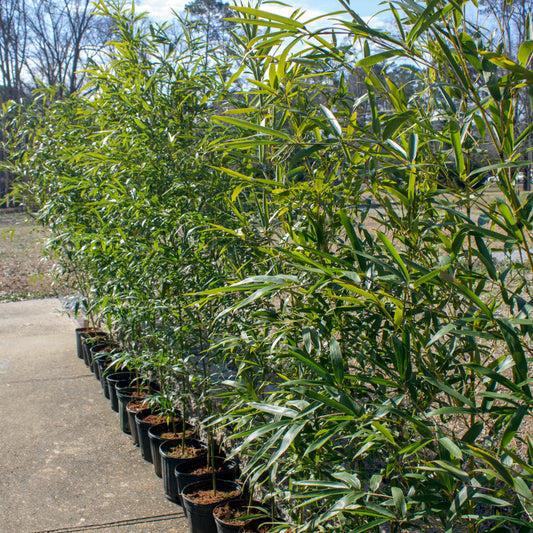
 Sale
Sale -
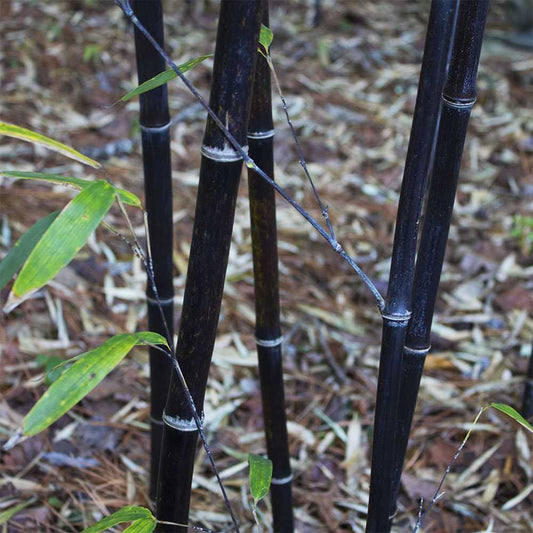
Black Bamboo
Regular price $89 + free shippingRegular priceUnit price per$99Sale price $89 + free shipping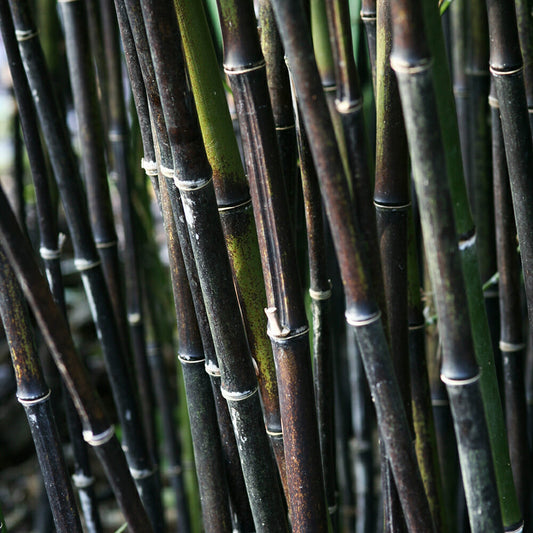
-
Bissetii
Regular price From $69 + free shippingRegular priceUnit price per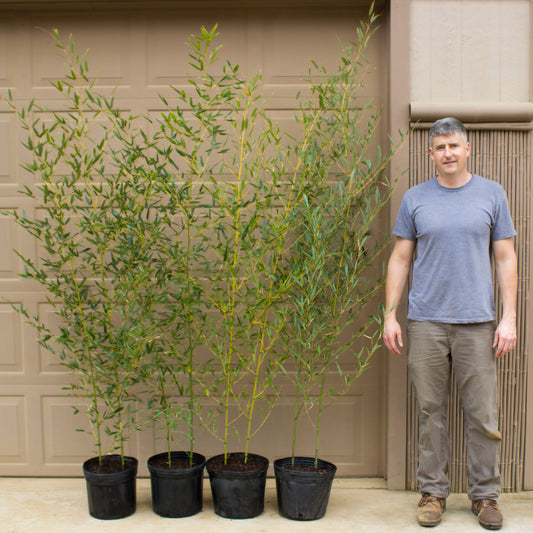

-
Weaver's Bamboo Dwarf
Regular price $69 + free shippingRegular priceUnit price per$79Sale price $69 + free shipping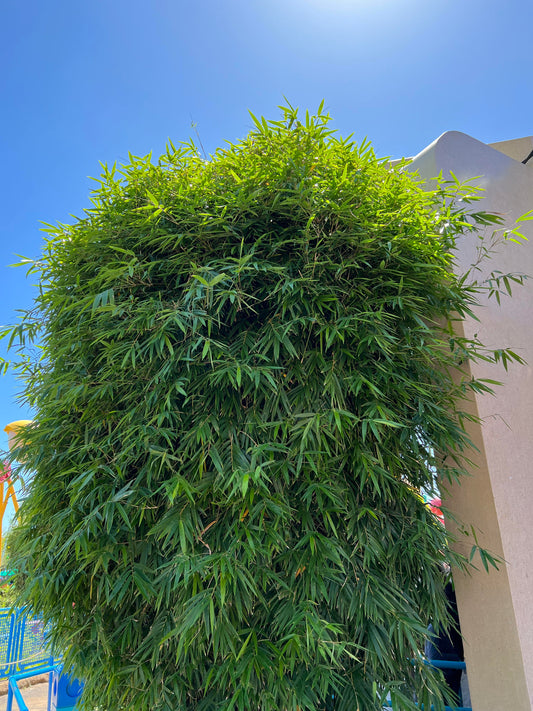
 Sale
Sale







