![]() | Bamboo Barrier |
| Home | Bamboo | Information | News | Photos | Specials | Order |
1-877-RZN-CANE
Barrier works best as a diversion type control method with a smooth surface on the side facing your bamboo planting.
There are natural methods to control and grow bamboo. To find out more click here
- Free Shipping -
![]()
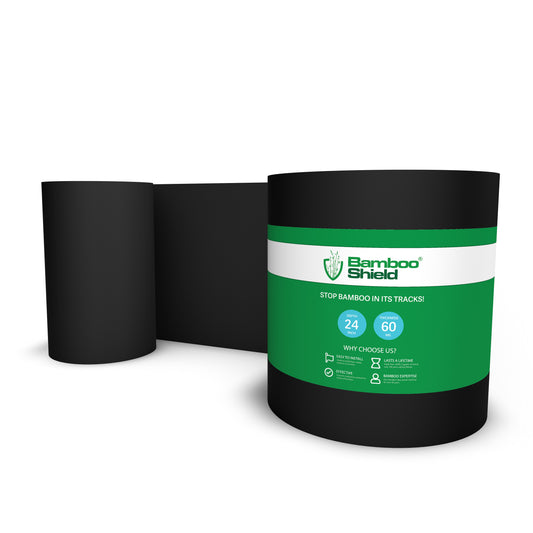
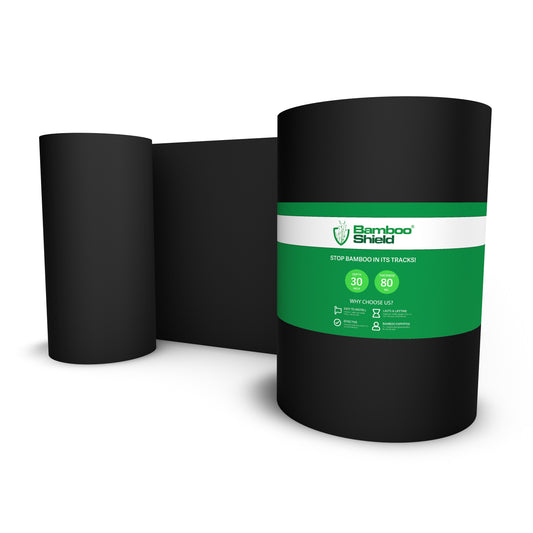
| Barrier Size | Cost per foot | Recommended application |
| 30 mil thick, 24" depth | $1.80 | Cold climates where bamboo is slow to spread. |
| 60 mil thick, 24" depth | $2.20 | Warm and cold climates where extra protection is wanted. |
| 60 mil thick, 30" depth | $3.10 | Warm climates and larger species of bamboo. |
|
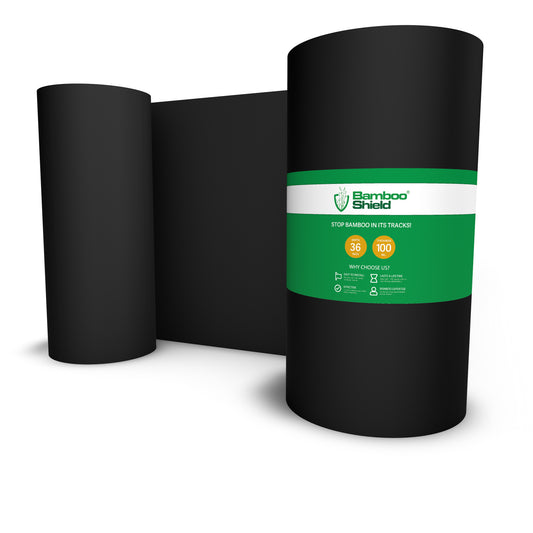
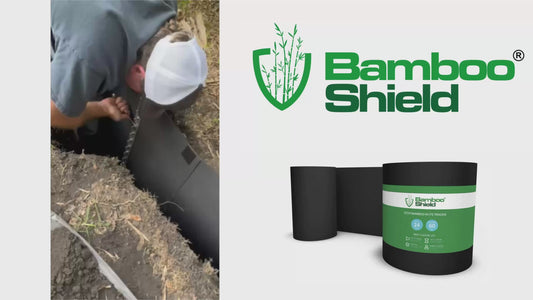
The polyethylene barrier has been made from recyclable post industrial regrind material when possible. In the photo you can see the bamboo barrier installed. Installation is simple. A trench or hole is dug and the barrier is placed inside. The bottom is left open to allow water to drain. Barrier is slightly closer to the bamboo at bottom and angles outward toward ground level. This slight slope encourage growth to turn upward. The slick side of the barrier is facing the bamboo planting area to assist in this effort. The bamboo is planted inside the barrier to control the bamboo. Step by step detailed installation instruction. |
![]() |
Maintenance:
Annual maintenance is a key to controlling bamboo even with a root barrier. Rhizomes spread outward from the center of the plant in late spring, summer and fall. In the Fall when rhizome activity has ended clear the top edge of the barrier and inspect for any rhizome over-growth. If any rhizomes have gone over the top of the barrier cut them off and pull them out of the ground. If this procedure is done annually the rhizome are new, they are soft and easy to remove.
Eventually the bamboo will begin to fill the enclosed area and start to compete with itself for nutrients. This can be avoided with a good maintenance program. Pruning, fertilizing, and replacing some soil will keep your bamboo health.
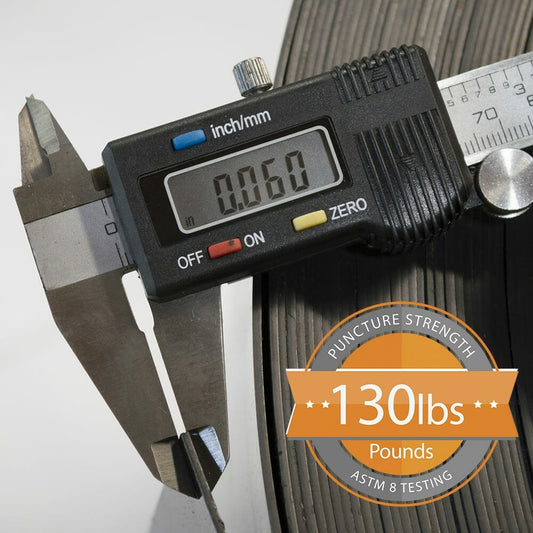
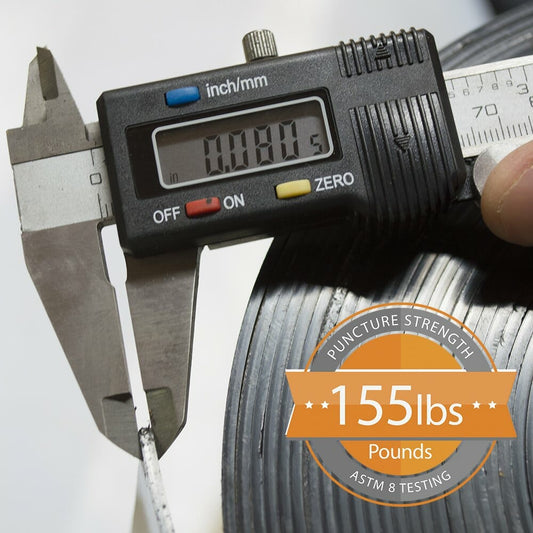
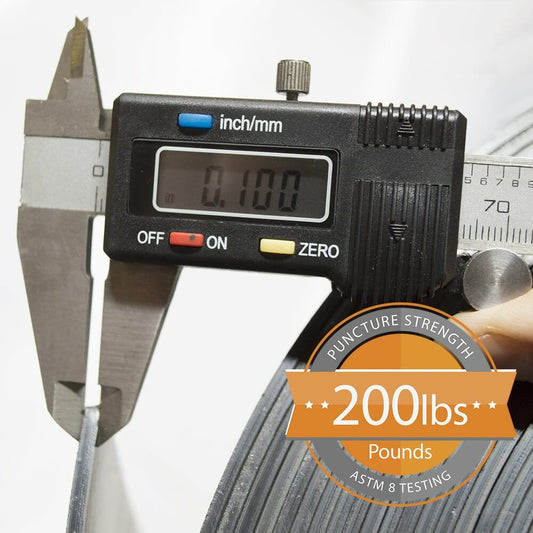
SPECIFICATIONS FOR THE HIGH DENSITY POLYETHYLENE ( HDPE ). 0.030"
| Parameter | Metric | English |
| Density | .955g/cc | .0345 lb/in3 |
| Tensile strength Yield | 28 MPa | 4060 psi |
| Elongation at break | Min 600% | Min 600% |
| Brittleness Temperature | Max -84 C | Max -118 F |
|
Plastic thinner than 30 mil has been shown to crack when ground temperatures 24 inches deep get below -15 degrees F. This would be extremely cold and the 30 mil does great at handling very cold temperatures without damage. The plastic barrier has a better chance not crack when frozen like other materials, even concrete will freeze and crack over the years. Driveways are poured 4 to 6 inches deep to allow heavy vehicles passage and parking.
Seldom are driveways seen without cracks. I know you all have seen concrete
driveways with cracks in them. Concrete was used many years ago ( Byron Agriculture Station in Byron, Georgia) as a below ground barrier system and found to crack below the frost line allowing bamboo rhizomes to emerge through to the other side. One of the many myths of bamboo is its ability to crack solid concrete. While a clumping type bamboo may do this, given enough years, a running type bamboo just runs and does not usually apply the outward pressure of a clumping bamboo or hardwood tree.
Bamboo makes an ideal garden plant and grows quickly to provide privacy and beauty. There are many ways to control bamboo. On this page we cover the use of an in ground plastic root barrier. If you wish to know the other methods please visit our Controlling Bamboo Page which cover several other methods. Many designers and contractors are nevertheless hesitant to recommend bamboo to clients unless a root barrier is installed. |
|
|
| Home | Bamboo | Information | News | Photos | Specials | Order |